

Your Best Defense
Starts Here
Starts Here
Over 50 Years of Practical Legal
Advice and Advocacy




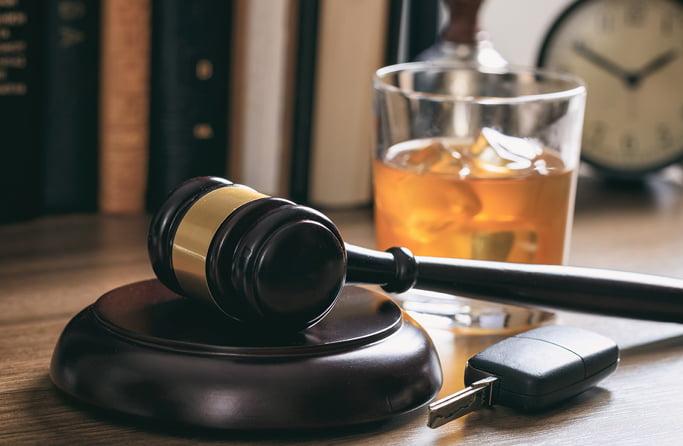
If you have been charged with drunk driving or driving under the influence of alcohol or drugs, contact one of our experienced attorneys now.
“Drunk Driving” and Driving Under the Influence cases are complicated and require specific knowledge of DUI laws and administrative rules. Put your case in the hands of experienced lawyers with over 50 years of combined experience with these types of cases.
Whether you submitted to the test or refused it, you should discuss the facts of your case with an experienced DUI or DWI lawyer. An experienced DUI or DWI lawyer may be able to help you get your license back sooner. The lawyers at Samdperil & Welsh, PLLC have represented hundreds of clients in these types of cases. We have extensive training in field sobriety testing and chemical testing, such as the operation of Intoxilyzer breath machines and laboratory blood analysis. We meet with each client, review his or her case and driving history, and work hard to get the most favorable outcome possible for the client.
If you have been charged with drunk driving or driving under the influence of alcohol or drugs, contact one of our experienced attorneys now.
If you agree to a breath or blood test, two things could happen: First, the police may use the test results against you in court. Second, if the test discloses that your alcohol concentration level is above a .08, the DMV will take away your license for 6 months (or more depending upon your driving history), regardless of whether you are convicted or even charged with Driving While Intoxicated (DUI or DWI).
If you refuse to submit to physical tests or to a test of blood, urine, or breath, no test may be given. As a result, the police will not have any test results to use against you in court. However, in New Hampshire, the State is permitted to introduce at trial your decision to refuse the test. More importantly, if you are arrested and refuse a breath or blood test, the DMV will still suspend your license for at least 6 months, and in some cases for 2 years. If you are convicted of DUI in NH, the DMV-ordered loss of license will be in addition to any court-ordered loss of license.
Whether you submitted to the test or refused it, you should discuss the facts of your case with an experienced DUI or DWI lawyer. An experienced DWI lawyer may be able to help you get your license back sooner. The lawyers at Samdperil & Welsh, PLLC meet with each client, review his or her case and driving history, and work hard to get the most favorable outcome possible for the client.
No. The New Hampshire Supreme Court has interpreted the state’s implied consent law “as giving the choice of the test to be used to the law enforcement officer not the accused driver.” However, the police must inform you of the results, and advise you that refusing a breath or blood test will result in a suspension of driving privileges or a loss of license.
If the police fail to follow certain procedures, the breath or blood test results may be inadmissible. At Samdperil & Welsh, PLLC, we have been defending DWI cases for over 50 years combined and are well-versed in these procedures.
“Advice of counsel is not constitutionally required” under either the federal or New Hampshire constitutions. This means that the police do not have to let you consult with a lawyer before you choose whether or not to take a chemical test or do physical tests. If you demand to speak to a lawyer before taking the test, the police may consider this a refusal to take the test.
Yes! For breath or blood testing to be performed correctly, certain procedures must be strictly followed. Even when those procedures are followed, errors can occur. Everything from proper equipment maintenance, to radio frequency interference, to an involuntary belch can affect breath test results.
If you provided a breath or blood sample to the police, you should hire a lawyer who is knowledgeable in the science of chemical testing, and who works with chemical testing laboratories and expert toxicologists. The lawyers at Samdperil & Welsh, PLLC know the proper testing procedures and work with respected scientists and experts.
We are pleased to work with CG Labs, a NH-based forensic analytical laboratory that specializes in the analysis of alcohol (ethanol) in blood and breath samples for clients charged with Driving While Intoxicated. We also work with other experts and toxicologists for clients charged with Driving Under the Influence of alcohol or drugs.
Before making an arrest for DWI, a police officer may ask the driver to submit to a preliminary breath test (PBT). A preliminary breath test is a roadside chemical test that measures the level of alcohol concentration in the person’s breath. A PBT can only be administered by a police officer who has been certified to use the PBT device.
The officer must inform the driver that, whether or not he or she agrees to take the roadside test, it will not prevent or require a subsequent test. The police officer must also provide the results of any test to the person taking the test immediately, and in writing if requested.
Yes, under certain conditions. Beginning in 2016, New Hampshire courts are authorized to restore limited driving privileges to a person who has been convicted of a DWI. A limited driving privilege of this kind is sometimes referred to as a hardship license, a work license, or a “Cinderella” license.
There are a number of requirements that accompany a limited driving privilege:
– It must be the person’s first DWI or DUI conviction.
– No other license suspension, such as an Administrative License Suspension (ALS) can be in effect.
– A court is not authorized to issue a limited driving privilege unless the person has already served at least 45 days of the court-ordered loss of license.
– Driving privileges are often limited to driving to and from work or attending counseling.
– And, any person who obtains a limited driving privilege after a DWI conviction must install an ignition interlock devices (a steering column breath-test device) for a minimum of one year.
For more information about limited driving privileges following a DWI or DUI conviction, contact the lawyers at Samdperil & Welsh, PLLC.
It depends. New Hampshire law imposes mandatory fines, a mandatory loss of license, and, in some cases, a mandatory jail sentence for persons convicted of Driving Under the Influence of alcohol or drugs (DWI and DUI).
The punishment may vary depending upon whether it is the person’s first DWI or whether the person has had a prior DWI or DUI conviction on his or her motor vehicle record (click here for more information about the penalties for subsequent DWI offenses), the person’s alcohol concentration levels (BAC or BrAC), and other facts specific to the case. Unless the charge is an Aggravated DUI or DWI, or there are other accompanying charges, a person charged with his or her first DUI or DWI offense does not face a risk of a jail sentence.
If you are charged with DUI or DWI in NH, you should contact a NH DWI lawyer as soon as possible, before you go to court, to minimize your risk and to discuss the possible consequences in your case.
In most DUI cases, court fines range from a minimum of $620 to $1240. In felony DUI cases, the fines can be even higher.
In addition to court fines, a person convicted of a DUI must obtain an SR-22 insurance certificate. A recent article estimates the average cost of an SR-22 is about $3,295 per year.
Additionally, there are the costs of the IDCMP state-mandated treatment program, which is usually upward of $500.
Avoiding a DUI conviction, for example when it is reduced to a lesser charge, can be a significant cost savings.